IsiZulu Culture
Overview of Zulu Culture
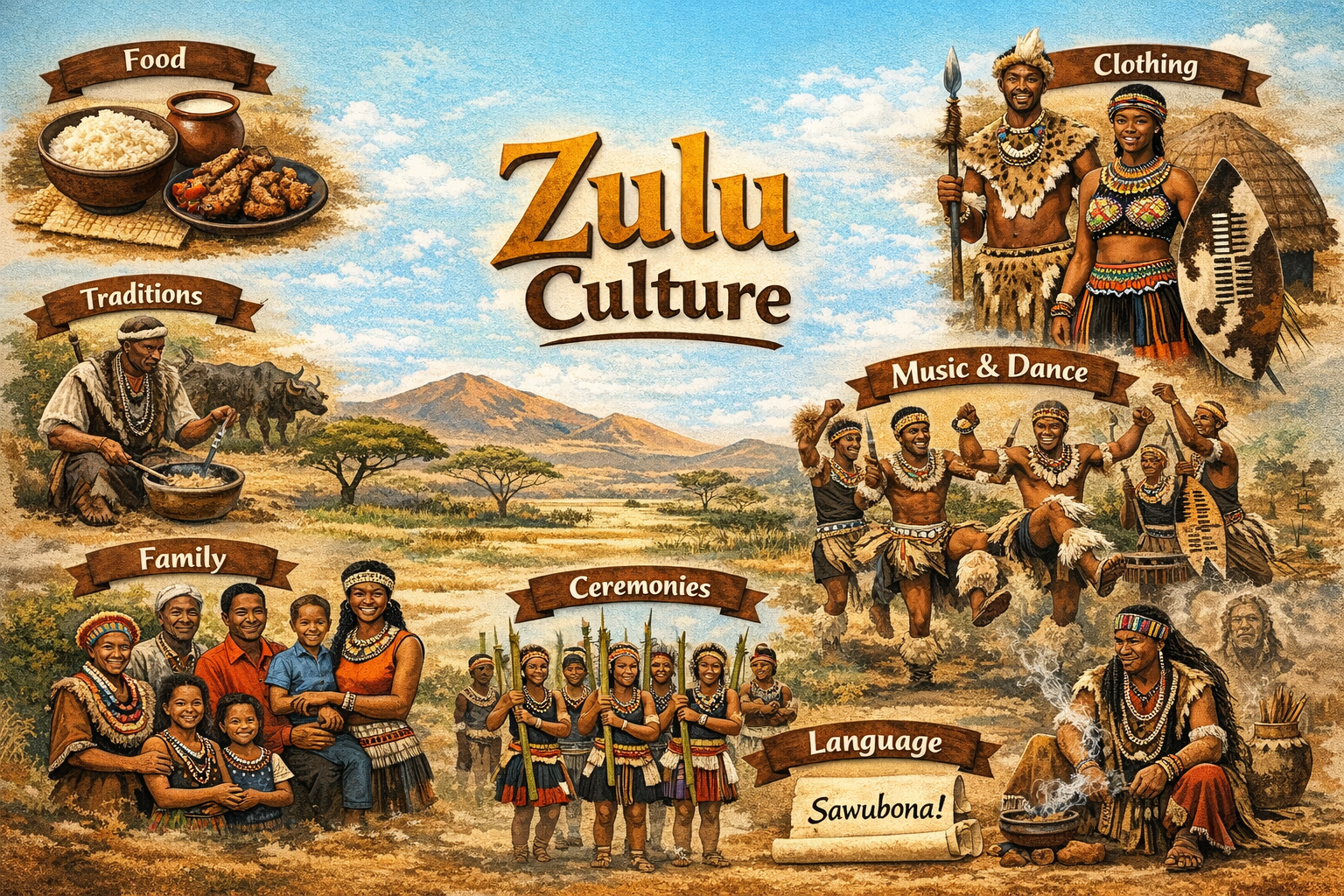
Zulu culture, associated with the Zulu people, is one of the richest and most influential cultures in South Africa. It is deeply rooted in respect, community values, and strong traditions that have been passed down through generations.
Food (Ukudla Kwesintu)
Traditional Zulu food is simple, nutritious, and closely connected to rural life and agriculture. Staple foods include maize-based dishes such as uphuthu (crumbly maize meal) and pap, often served with meat or vegetables.
Popular traditional foods include:
Uphuthu – served with amasi (sour milk)
Amasi – a favourite in many households
Chakalaka
Braai meats
Food plays an important role during ceremonies and family gatherings, where sharing meals strengthens unity.
Traditions and Customs (Amasiko)
Zulu traditions are centred around respect, family, and community. Important customs include:
Respect (Inhlonipho): A core value, especially shown to elders
Lobola (bride price negotiations between families)
Naming ceremonies and rites of passage
Ceremonies often involve music, dance, and rituals that connect people with their ancestors.
Language and Communication
Zulu is one of the most widely spoken languages in South Africa. It is rich in expression and includes respectful forms of speech depending on who is being addressed.
Greetings and polite language are very important and reflect the value of respect in Zulu society.
Clothing (Imvunulo YesiZulu)
Traditional Zulu clothing, known as imvunulo, is worn during cultural events and ceremonies. It is colourful and symbolic, often indicating age, gender, and marital status.
Key elements include:
Beaded accessories (necklaces, bracelets, headbands)
Skirts made from animal skin or fabric
Headdresses and decorative items
Beadwork is especially significant, as different colours and patterns communicate messages about relationships and social status.
Family and Social Structure
The family unit is central in Zulu culture. Extended families often live close together and support one another.
Key aspects include:
Strong respect for elders
Collective decision-making
Emphasis on unity and cooperation
Children are taught values, discipline, and cultural practices from a young age.
Beliefs and Spirituality
Zulu culture includes strong spiritual beliefs, particularly in the role of ancestors (amadlozi). Ancestors are believed to guide and protect the living.
Traditional healers, known as Sangoma, play an important role in connecting the physical and spiritual worlds.